Riley Coleman · 8 September 2026
How Local Iron Production Methods Adapt to Environmental Challenges in Arid Zones
Arid zones present distinct hurdles for iron production, including extreme water scarcity, high dust levels, intense heat, and limited vegetation cover, yet local operations in regions such as Australia's Pilbara and parts of the Middle East have developed targeted adaptations over decades. These methods focus on minimizing resource use while maintaining output, with data from mining records showing consistent application since the late twentieth century.
Water conservation stands at the center of these adjustments, since traditional wet beneficiation processes consume large volumes that arid environments cannot supply reliably. Facilities instead employ dry magnetic separation and air classification systems that process ore without added moisture, and operators recycle process water through closed-loop systems that capture and treat evaporation losses. Studies from the Australian government indicate that such dry methods now handle over 60 percent of iron ore beneficiation in the Pilbara, cutting freshwater intake by measurable margins each year.
Dust Management and Heat Mitigation Strategies
Dust generated during crushing, screening, and transport poses both environmental and operational risks in dry climates, prompting the widespread installation of enclosed conveyor systems, electrostatic precipitators, and water mist barriers that operate on minimal volumes. Wind barriers constructed from local earth berms and mesh screens further reduce airborne particles, while real-time monitoring stations track particulate levels and trigger automatic adjustments. Heat from direct sunlight and equipment operation accelerates equipment wear, leading operators to schedule maintenance during cooler night hours and to coat machinery with reflective materials that lower surface temperatures.
Energy sources have shifted toward on-site solar arrays and wind turbines that power grinding mills and pellet plants, reducing reliance on diesel generators that struggle with fuel logistics across vast distances. In September 2026, several Pilbara sites plan to expand these renewable installations following grid connection upgrades announced earlier in the decade.
Material Sourcing and Process Innovations
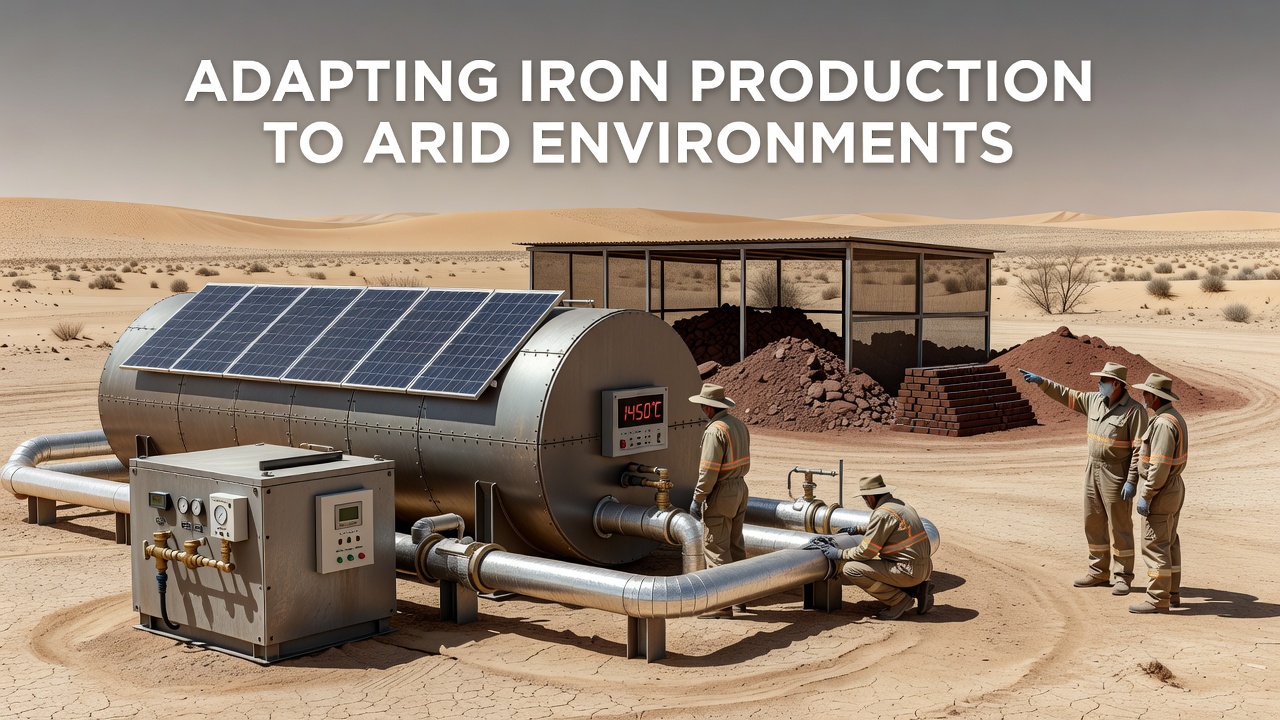
Local iron production increasingly draws on nearby ore deposits to shorten transport distances, and operators blend high-grade fines with binders that require less water during pellet formation. Research published through the University of Arizona's mining engineering program documents how these blends maintain pellet strength under high-temperature conditions typical of arid sintering plants. Process control software adjusts parameters in real time based on ambient humidity and temperature readings, preventing over-drying that can weaken product quality.
Rehabilitation efforts after extraction incorporate drought-resistant native species and soil amendments derived from mine tailings, which help stabilize surfaces against wind erosion. Government monitoring in Western Australia shows progressive improvement in post-mining land stability when these techniques are applied consistently.
Regional Examples and Ongoing Developments
Operations in the Arabian Peninsula apply similar principles but incorporate additional seawater desalination for limited cooling circuits, with brine management integrated into solar evaporation ponds. Data released by the Saudi Geological Survey highlights how hybrid dry-wet circuits balance output against the higher energy costs of desalination. In both Australia and the Middle East, collaborative research networks share sensor data on dust dispersion patterns, allowing facilities to refine barrier placements and operational timing.
Supply chain adaptations include covered rail cars and enclosed ship loaders that protect product from contamination and reduce spillage during export. These measures align with international environmental reporting frameworks that track resource efficiency across arid mining districts.
Conclusion
Local iron production in arid zones continues to refine these adaptations through incremental technical adjustments rather than wholesale process changes. Figures from industry reports demonstrate measurable reductions in water consumption and dust emissions where dry technologies and renewable power sources have been adopted. Continued monitoring and regional knowledge exchange support further refinements as conditions evolve.