Ellis Walter · 6 October 2026
Microbial Influences on Iron Oxidation Processes Within Extreme Desert Ecosystems
Extreme desert ecosystems present some of the most challenging conditions for life on Earth yet microbial communities continue to drive iron oxidation processes that shape mineral landscapes and geochemical cycles across these regions. Researchers have documented how specialized bacteria and archaea accelerate the conversion of ferrous iron to ferric forms even when water availability drops below measurable thresholds for extended periods and temperatures fluctuate dramatically between day and night.
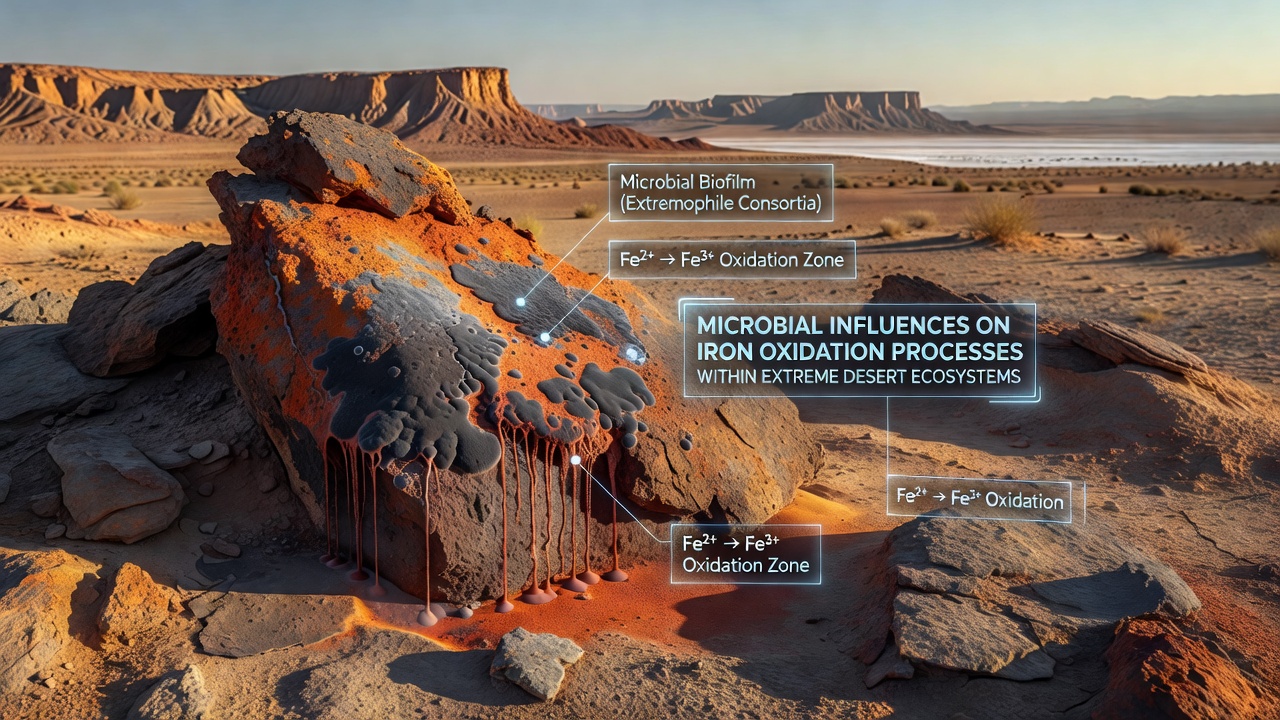
Data collected from sites in the Atacama Desert of Chile and the Namib Desert of Namibia show that iron-oxidizing microbes form thin biofilms on rock surfaces and within subsurface pores where trace moisture persists. These organisms obtain energy by transferring electrons from dissolved ferrous iron while reducing oxygen or nitrate as terminal electron acceptors. Studies conducted over multi-year monitoring campaigns reveal that oxidation rates increase measurably following rare rainfall events although activity never ceases entirely during dry intervals.
Key Microbial Groups and Their Metabolic Strategies
Investigations led by teams from multiple institutions have identified several dominant taxa capable of iron oxidation under hyperarid conditions. Members of the genus Leptospirillum maintain activity at pH values below 3.0 and tolerate elevated salt concentrations that would inhibit most surface microbes. Alongside these acidophiles, certain actinobacteria perform iron oxidation at near-neutral pH by coupling the process to organic compound oxidation or by using atmospheric hydrogen as an additional energy source. Genomic analyses released in October 2026 from an international collaboration confirm that these desert strains carry distinct gene clusters for iron-sulfur cluster assembly and extracellular electron transfer that differ from their counterparts in acid mine drainage environments.
Metabolic flexibility allows these organisms to switch between iron oxidation and other respiratory pathways when ferrous iron becomes limited. Some populations produce extracellular polymeric substances that retain water and concentrate iron ions near cell surfaces thereby increasing reaction efficiency. Field measurements indicate that such adaptations enable continuous though slow mineral transformation even when relative humidity remains under 10 percent for months at a time.
Environmental Controls and Mineral Outcomes
Iron oxidation rates in desert settings respond strongly to microscale variations in temperature, salinity, and light exposure. Diurnal temperature swings of more than 40 degrees Celsius create condensation cycles that supply brief pulses of liquid water sufficient to activate microbial metabolism. Researchers tracking these cycles with automated sensors have recorded corresponding spikes in ferric mineral precipitation within hours of dew formation. The resulting minerals include goethite, hematite, and poorly crystalline ferrihydrite that cement soil particles and alter surface albedo.
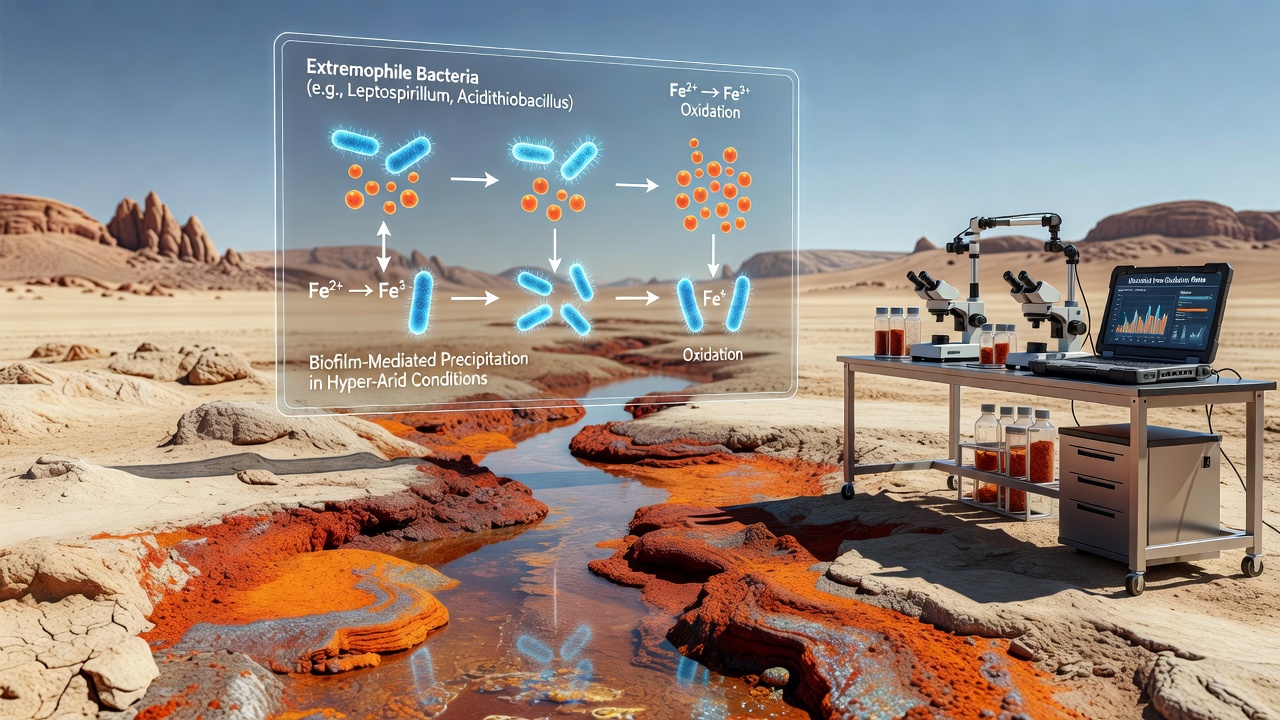
Salinity exerts a further selective pressure because high chloride levels stabilize certain iron complexes while inhibiting others. In coastal desert margins where marine aerosols deposit sodium chloride, microbial communities shift toward halotolerant iron oxidizers that maintain activity at conductivities exceeding 100 millisiemens per centimeter. Laboratory incubations using site-derived isolates demonstrate that these strains continue oxidizing iron at rates comparable to those measured in less saline inland locations when provided with equivalent moisture and substrate.
Interactions with Broader Geochemical Cycles
Iron oxidation by microbes intersects with nitrogen, sulfur, and carbon cycles in desert ecosystems. Certain iron oxidizers also reduce nitrate to nitrogen gas or nitrite thereby linking iron and nitrogen transformations within the same microhabitat. Sulfur-oxidizing bacteria frequently co-occur with iron oxidizers and generate acidity that further promotes iron solubility and re-oxidation. Carbon fixation through the Calvin cycle or reverse tricarboxylic acid cycle supplies organic matter that supports heterotrophic members of the community and contributes to the sparse organic carbon pool found in desert soils.
Long-term monitoring programs coordinated by agencies such as Australia's national science agency and the European Space Agency's planetary exploration teams have quantified the contribution of microbial iron oxidation to total iron cycling in arid zones. Results indicate that biological processes account for a substantial fraction of observed ferric mineral accumulation particularly in surface crusts and varnish layers that develop over centuries to millennia.
Recent Field Observations and Analytical Advances
Deployment of portable spectrometers and metagenomic sampling kits during 2025 field seasons produced high-resolution maps of microbial distribution relative to iron mineral phases. These datasets reveal that iron oxidation hotspots coincide with zones of higher microbial diversity and elevated extracellular enzyme activity. Satellite imagery combined with ground validation shows that areas with documented microbial activity exhibit distinct spectral signatures in the visible and near-infrared range compared with sterile control plots.
Analytical methods such as synchrotron-based X-ray absorption spectroscopy now allow researchers to distinguish biotic from abiotic iron oxidation products based on particle size distribution and crystal morphology. Such distinctions help refine estimates of microbial contributions to global iron budgets in arid environments projected to expand under changing climate patterns.
Conclusion
Microbial mediation of iron oxidation continues to reshape mineral surfaces and geochemical gradients throughout extreme desert ecosystems despite severe constraints on water and nutrients. Ongoing research programs document the metabolic versatility of these communities and quantify their influence on iron mineral formation across multiple desert regions. Findings from monitoring campaigns and genomic studies provide baseline data that support predictions of how these processes may respond to future environmental shifts while informing models of similar systems on other planetary bodies.